
Diesel and Petrol Price in Pakistan Today – Latest Fuel Prices Effective 30 July 2026
The **Diesel and Petrol Price in Pakistan Today has once again become one of the most searched topics across the country as the government has issued a fresh fuel price notification effective 30 July 2026.
According to the latest update, there has been a slight decrease in the price of petrol, while High-Speed Diesel (HSD) has witnessed an increase. At the same time, significant reductions have been announced for LPG and kerosene oil, offering relief to consumers who rely on these fuels for household and commercial use.
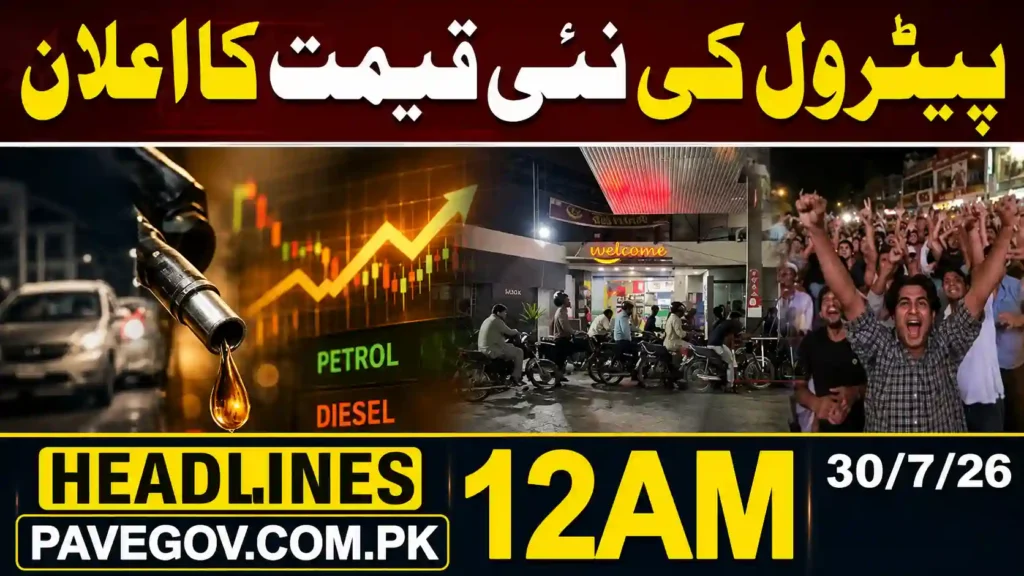
The latest revision in fuel prices directly affects transportation costs, inflation, logistics, agriculture, and the prices of daily-use items. Every increase or decrease in petroleum prices has a ripple effect across Pakistan’s economy because fuel is one of the most important components of business operations and household expenses.
Latest Petrol and Diesel Prices in Pakistan
According to the latest official update effective 30 July 2026, the revised petroleum prices are as follows:
| Fuel Type | Previous Price | New Price | Change |
|---|---|---|---|
| Petrol (Super) | PKR 335.81/Ltr | PKR 335.06/Ltr | Decrease of PKR 0.75 |
| High-Speed Diesel (HSD) | PKR 388.38/Ltr | PKR 390.62/Ltr | Increase of PKR 2.24 |
| Light-Speed Diesel | PKR 199.98/Ltr | PKR 199.98/Ltr | No Change |
| LPG | PKR 308.76 | PKR 241.43 | Decrease of PKR 67.33 |
| Kerosene Oil | PKR 282.19 | PKR 233.71 | Decrease of PKR 48.48 |
These revised prices are now applicable across Pakistan and remain effective until the next government notification.

Petrol Price in Pakistan Today Reduced Slightly
The latest notification brings a minor reduction of PKR 0.75 per litre in the Petrol Price in Pakistan Today. Although the decrease is relatively small, it still provides some financial relief to millions of motorcycle riders, car owners, ride-hailing drivers, and daily commuters.
Petrol remains the most widely consumed fuel in Pakistan because it is used by private vehicles, motorcycles, taxis, and many commercial vehicles operating in urban areas. Even a small reduction in petrol prices can help consumers save money over time, particularly those who travel long distances every day.
High-Speed Diesel Price in Pakistan Increased
Unlike petrol, the High-Speed Diesel Price in Pakistan has increased by PKR 2.24 per litre, taking the new price to PKR 390.62 per litre.
Diesel plays a crucial role in Pakistan’s economy because it is heavily used by:
- Trucks transporting goods across the country
- Buses and public transport
- Agricultural machinery
- Construction equipment
- Industrial generators
Any increase in diesel prices usually leads to higher transportation costs, which may eventually affect the prices of vegetables, fruits, construction materials, and other essential commodities.

Major Relief in LPG Prices
One of the biggest highlights of the latest petroleum notification is the significant reduction in LPG prices.
The price of LPG has been reduced by PKR 67.33, bringing it down from PKR 308.76 to PKR 241.43.
This reduction is expected to benefit households that use LPG cylinders for cooking, particularly in remote and rural areas where natural gas connections are unavailable. Restaurants, hotels, and small businesses that depend on LPG may also experience lower operating costs.

Kerosene Oil Also Becomes Cheaper
Consumers using kerosene oil have also received welcome news.
The price of kerosene has dropped by PKR 48.48, reducing the price from PKR 282.19 to PKR 233.71.
Kerosene continues to be widely used in many northern and remote regions of Pakistan for cooking, heating, and lighting purposes. The latest reduction is expected to provide direct financial relief to families living in these areas.
No Change in Light-Speed Diesel
The government has decided to maintain the price of Light-Speed Diesel at PKR 199.98 per litre.
This means consumers using this particular fuel category will continue paying the same amount until the next price revision.
Why Do Fuel Prices Change in Pakistan?
The Petrol Price in Pakistan is reviewed periodically based on several economic and international factors.
Some of the most important reasons include:
- International crude oil prices
- Exchange rate of the Pakistani Rupee against the US Dollar
- Global demand and supply
- Import costs
- Freight charges
- Petroleum Levy
- General Sales Tax (GST)
- Distribution and dealer margins
Whenever international oil prices increase or the rupee weakens against the dollar, Pakistan generally experiences higher fuel prices. On the other hand, falling crude oil prices or currency stability may help reduce domestic petroleum prices.
Impact on Transportation Sector
Fuel prices directly influence Pakistan’s transportation industry.
While the slight reduction in petrol prices may provide limited relief to private vehicle owners, the increase in diesel prices may place additional financial pressure on transport companies.
Freight operators often adjust transportation charges after diesel price revisions, which can eventually influence the cost of delivering goods across the country.
This is why diesel prices are often considered one of the strongest indicators of future inflation.
Effect on Inflation
Changes in Diesel and Petrol Price in Pakistan Today are closely linked with inflation.
When diesel prices increase:
- Transportation becomes more expensive.
- Delivery costs rise.
- Agricultural production costs increase.
- Manufacturing expenses grow.
- Retail prices often move upward.
Conversely, reductions in petrol, LPG, and kerosene can help lower household expenses, although their impact on overall inflation may vary depending on market conditions.
Relief for Household Consumers
The latest petroleum price adjustment provides meaningful relief for families using LPG and kerosene.
Lower LPG prices may reduce monthly cooking expenses for thousands of households.
Similarly, reduced kerosene prices will benefit consumers living in areas where alternative energy sources are limited.
Although the reduction in petrol prices is modest, every decrease contributes to lowering daily transportation expenses.
Impact on Businesses
Businesses across Pakistan closely monitor every petroleum price revision.
Logistics companies, courier services, delivery platforms, agriculture, construction firms, factories, and public transport operators all depend heavily on fuel.
Lower petrol prices may slightly reduce operating expenses for companies relying on petrol-powered vehicles.
However, the increase in diesel prices may offset some of these savings for businesses operating large commercial fleets.
What Should Consumers Expect?
Fuel prices remain highly dependent on international oil market trends.
If global crude oil prices remain stable and the Pakistani Rupee performs well against the US Dollar, consumers may continue to see relatively stable petroleum prices in future revisions.
However, any major geopolitical event, supply disruption, or increase in international crude oil prices could lead to another adjustment in Pakistan’s petroleum rates.
Consumers are therefore advised to follow every official fuel price announcement before making financial or transportation-related decisions.
Final Thoughts About Petroleum Price
The latest Diesel and Petrol Price in Pakistan Today effective 30 July 2026 presents a mixed picture for consumers. While the Petrol Price in Pakistan Today has been reduced slightly to PKR 335.06 per litre, the High-Speed Diesel Price in Pakistan has increased to PKR 390.62 per litre. At the same time, significant reductions in LPG and kerosene oil prices offer much-needed relief for households and commercial users.
As petroleum prices continue to influence transportation, inflation, agriculture, and business costs across Pakistan, staying updated with every official notification remains essential. Consumers, businesses, and transport operators should regularly monitor fuel price revisions to better manage their budgets and operational expenses in the coming weeks.