Big Relief for Consumers: Kerosene Oil Price Reduced by Rs. 48.29 Per Liter
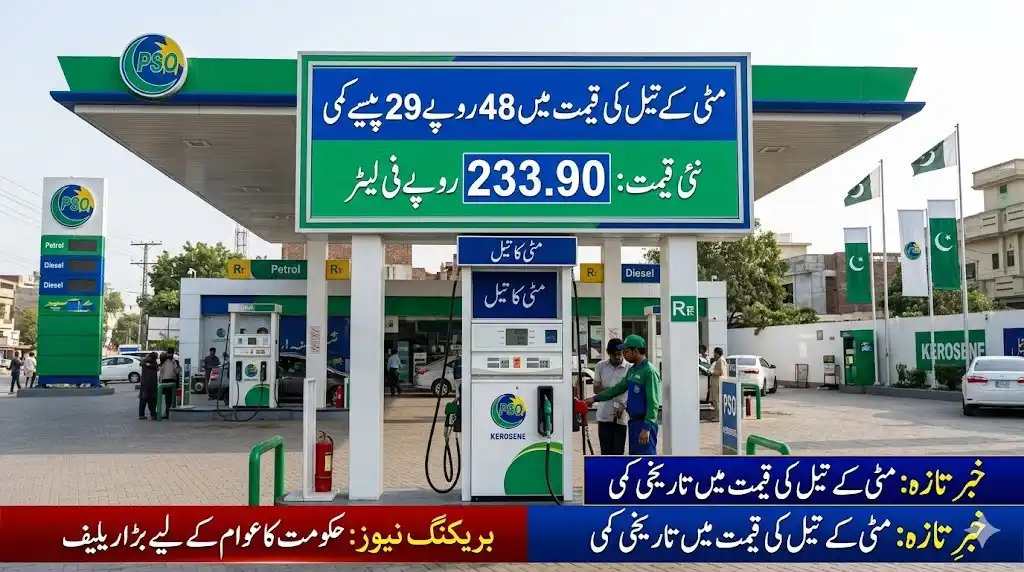
In a fresh dose of relief for consumers, the federal government has cut the kerosene oil price by Rs48.29 per litre, bringing the new rate down to Rs233.90 from the earlier Rs282.19. The notification took effect immediately, giving households across Pakistan one more reason to welcome the latest round of fuel price reduction, which had already covered cuts in petrol price and diesel price a day before.
Government Calls It Major Relief in Kerosene Oil Price
Officials describe the latest adjustment as one of the more significant cuts in the kerosene oil price in recent memory, pointing to a nearly 17 percent drop from the previous rate. The Ministry of Finance notification framed the move as part of an ongoing effort to pass on the benefit of softer global crude oil prices and a steady exchange rate directly to the public, rather than holding on to the savings.

How Much Will Consumers Actually Save
For everyday users, the numbers add up quickly. A household buying around 10 litres of kerosene a month would save roughly Rs483 under the new rate, while a small shop or workshop using 20 litres monthly would save close to Rs966. While these may look like modest figures on their own, they matter a great deal for low-income families who budget every rupee, especially when combined with the parallel savings from cheaper petrol price and diesel price.

Kerosene Oil Price: Before and After
| Detail | Previous Rate | New Rate |
| Kerosene Oil Price (Rs/Litre) | 282.19 | 233.90 |
| Total Reduction | — | Rs48.29 per litre |
| Effective From | — | Immediately |

Historical Context: Kerosene Price Trend in 2026
This is not the first time the kerosene oil price has been adjusted this year. Like petrol and diesel, kerosene rates have moved up and down through 2026 in line with shifting international crude oil benchmarks and currency fluctuations. What stands out about this particular cut is its size — Rs48.29 per litre is among the larger single-revision drops recorded recently, putting the price noticeably below the levels households had grown used to over the past several months.
Comparing the current Rs233.90 rate against earlier points in the year gives a clearer picture of just how much relief for consumers this latest notification represents, particularly for those who track fuel costs closely as part of household or small-business budgeting.

Part of a Bigger Relief Package: Petrol and Diesel Cuts Too
This kerosene oil price cut did not arrive on its own. Just a day earlier, the government had already announced a Rs74 per litre reduction in petrol price and a Rs67 per litre cut in diesel price, among the steepest single-day drops seen this year. Taken together, the three announcements amount to a broad-based fuel price reduction affecting nearly every category of consumer, from commuters to transporters to rural households.
Sectors That Gain the Most From This Relief
- Households in off-grid areas that depend on kerosene for cooking, heating, and lighting
- Small businesses and roadside vendors running kerosene-powered stoves and lamps
- Daily commuters benefiting from the lower petrol price
- Transport and logistics companies passing on savings from the reduced diesel price
- Low-income families for whom every rupee saved on fuel price eases monthly budgeting
Why the Government Keeps Adjusting Petroleum Prices
Petroleum prices in Pakistan, including kerosene oil price, petrol price, and diesel price, are reviewed every fortnight by the Oil and Gas Regulatory Authority (OGRA), which factors in international crude oil rates, the rupee-dollar exchange rate, and government levies before recommending new prices to the Ministry of Finance. When global oil prices ease or the rupee holds steady, the resulting savings are typically passed on to consumers through a notified fuel price reduction like the one announced this week.
What Consumers Should Know Going Forward
With the next OGRA review due in roughly two weeks, consumers are advised to keep track of official notifications rather than relying on word of mouth, since dealer-level prices can lag the official kerosene oil price by a day or two in smaller towns. Anyone planning a bulk purchase of kerosene, especially ahead of winter, may want to confirm the latest notified rate before paying at the local store.
For now, the latest round of cuts offers tangible relief for consumers already dealing with rising day-to-day expenses, and continues a pattern of fuel price softening that has benefited households across both urban and rural Pakistan in 2026.
Frequently Asked Questions (FAQs)
By how much was the kerosene oil price reduced?
The kerosene oil price was reduced by Rs48.29 per litre, bringing the new rate to Rs233.90 per litre.
What was the kerosene oil price before this cut?
Before this reduction, the kerosene oil price in Pakistan stood at Rs282.19 per litre.
Did petrol and diesel prices also see relief recently?
Yes, petrol price was cut by Rs74 per litre and diesel price by Rs67 per litre a day before the kerosene oil price reduction was announced.
How much can a household save with the new kerosene oil price?
A household using around 10 litres of kerosene per month would save roughly Rs483, based on the Rs48.29 per litre reduction.
Who sets the kerosene oil price and other fuel prices in Pakistan?
The Oil and Gas Regulatory Authority (OGRA) recommends petroleum prices, and the Ministry of Finance issues the final notification covering kerosene oil price, petrol price, and diesel price.
When will the next review of petroleum prices take place?
Petroleum prices in Pakistan, including kerosene oil price, are typically reviewed every two weeks, so the next adjustment is expected around the next fortnightly cycle.