
Pakistan Petroleum Ltd Denies Building Artificial Island – Full Details, Clarification & Project Overview
Pakistan Petroleum Ltd (PPL), one of Pakistan’s largest state-owned energy companies, has officially denied international media claims that it is building an artificial offshore island for oil and gas exploration near Sujawal, Sindh. These reports — which circulated after a Bloomberg publication — created confusion on social media, raising questions about offshore drilling, island construction, and Pakistan’s future energy strategy.
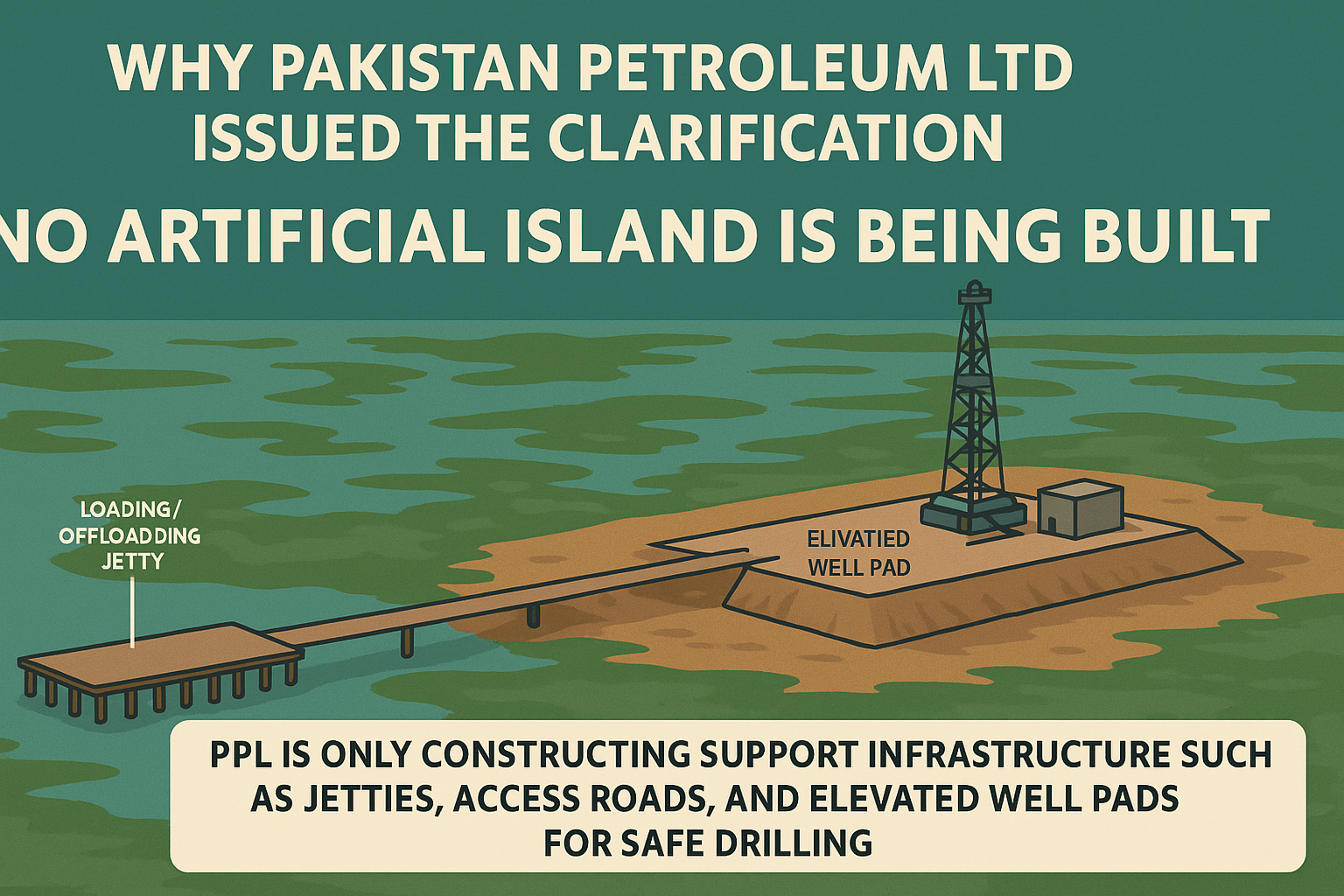
In its latest statement, PPL clarified that no artificial island is being built. Instead, the company is constructing supporting infrastructure for safe drilling in a marshy and technically challenging region. The project is part of Pakistan’s broader energy exploration efforts aimed at strengthening the national economy and reducing dependence on imported fuels.
This in-depth article explains everything:
✔ Why PPL issued the clarification
✔ What the Bloomberg report said
✔ The technical nature of PPL’s drilling project
✔ Full details of the Sirani Block location
✔ How the construction differs from an offshore island
✔ Pakistan’s renewed momentum in oil and gas exploration
✔ Reactions, facts, and future possibilities
Check Also: CMH Rawalpindi Announces New Permanent Jobs for Multiple Staff Positions
Why Pakistan Petroleum Ltd Issued the Clarification — Misleading Island Claims Explained
The confusion began when Bloomberg, in a recent report, quoted PPL’s General Manager Exploration and CBD, Arshad Palekar, suggesting that Pakistan was creating an artificial island 30 km off the Sindh coast to support upcoming drilling operations.
This statement triggered global speculation and social-media commentary regarding Pakistan’s renewed offshore oil potential and large reserves.
However, PPL quickly responded, calling the coverage:
“Misleading and not reflective of the technical scope or design of the project.”
According to PPL, there is no independent artificial island, no separate landmass being constructed, and no offshore island reclamation project. Instead, the infrastructure being developed is limited, purpose-built elevation and access support needed for drilling in a marshy environment.
Check Also: Breaking: NADRA Announces Intelligence Officer Jobs 2025 Across Pakistan – City-Wise Vacancies

What PPL Is Actually Building – No Artificial Island, Only Elevated Drilling Infrastructure
PPL clarified that its activities are being carried out in the Sirani Block, a marshy southern region that has always been difficult to explore due to:
- Soft soil conditions
- Accessibility challenges
- Tidal fluctuations
- Marshland instability
- Lack of infrastructure
Because of these environmental and geographic challenges, PPL is creating necessary ground support to ensure safe exploration work. These include:
1. Development of Loading & Offloading Jetties
PPL is constructing jetties to safely load/unload equipment and transport heavy material for drilling.
2. Construction of an Access Road
A connected road is being built from the jetty to the well pad, making the marshy terrain accessible for heavy machinery.
3. Elevation of Road and Well Pad (Up to 9 Feet)
To protect against:
- High tides
- Flooding
- Seasonal water rise
Both structures are being raised by around nine feet.
Check Also:HEC Reschedules Law Admission Test (LAT) for Balochistan – New Date Announced
4. Use of a Natural 17-Kilometer Water Channel
The company is using this natural channel to transport:
- Rig equipment
- Specialized machinery
- Drilling material
- Seismic tools
by barge.
5. Well Site Located 30 KM from Mainland
This distance created confusion, leading media outlets to assume it was an offshore island.
However, PPL clarified that the site is within marshland, not the open sea.

Bloomberg Report and Global Reactions — How the Island Story Went Viral
Bloomberg’s narrative quickly spread because:
- Pakistan’s offshore region is believed to have massive untapped oil reserves
- Former US President Donald Trump had previously claimed Pakistan holds “massive oil reserves”
- Energy sector developments attract global investor interest
- The idea of a new artificial island created excitement and speculation
However, PPL emphasized that the report did not fully reflect the technical nature of the project, leading to misconceptions.

Where Is the Project Located? — The Sirani Block Explained
The drilling site is located in the southern marshy belt of the Sirani Block, an area:
- Close to Sujawal district
- Characterized by swamp terrain
- Full of tidal creeks
- Previously considered unsuitable for traditional drilling
- Rich in exploration potential
This region has remained largely unexplored due to:
- Poor accessibility
- High operational risks
- Challenging logistics
- Water-saturated soil
PPL has previously carried out 2D and 3D seismic surveys using transition-zone geophysical equipment specifically designed for marshy and swampy environments.
The company confirmed that initial drilling is scheduled for March 2026.

Is Pakistan Still Working on Offshore Oil Exploration? — The Bigger Picture
Yes. Even though PPL denied constructing an artificial island, Pakistan is actively working to expand its offshore exploration portfolio.
Key developments supporting this momentum include:
1. Renewed Government Focus
Pakistan is eager to reduce oil import dependency, which costs billions of dollars annually.
2. New Exploration Licenses Granted
After Trump’s comments went viral, Pakistan saw renewed interest in its offshore potential.
The government issued fresh exploration licenses to:
- Pakistan Petroleum Ltd (PPL)
- Mari Energies Ltd
- Prime International Oil and Gas Company
3. International Investor Interest
Global partners are monitoring:
- Offshore blocks
- Deep-sea drilling prospects
- Potential mega-reservoirs
4. High Risk, High Reward Sector
Offshore drilling requires significant investment but offers the possibility of massive returns if a major discovery is made.
Why Media Misunderstood the Project — Technical Terms vs Public Perception
The phrase “elevated drilling site” was misinterpreted as:
- New land reclaimed from the sea
- Construction of an artificial island
- Offshore island development effort
In reality, the work involves:
- Strengthening the marshy ground
- Protecting against high tides
- Creating safe operational zones
- Logistics staging areas
None of these equate to:
- A man-made island
- Offshore reclamation
- Sea-based land mass creation
PPL’s statement clarified this difference.
PPL’s Seismic Data and Drilling Preparations — Technical Overview
PPL has completed:
- 2D seismic acquisition
- 3D seismic acquisition
using advanced transition-zone technology, ideal for environments like:
- Swamps
- Marshlands
- Mud-flats
- Inter-tidal zones
- Shallow creeks
This data is now under interpretation, and drilling has been scheduled for March 2026, marking a major milestone for the Sirani Block.
Importance of the Sirani Block Discovery — Why It Matters
If drilling is successful, Pakistan may find:
- New oil reservoirs
- Large natural gas deposits
- Strategic reserves
- Long-term domestic supply options
The benefits may include:
- Lower import bills
- Stronger rupee
- Cheaper fuel
- Increased economic stability
- Job creation
- Energy security
Because Pakistan’s energy imports currently cost billions, new discoveries could transform the national economy.
How Far Is the Well Site? — Location Details Clearing Confusion
The area is:
- 30 km from mainland
- Accessible by a 17 km water channel
- Surrounded by marshy wetland
- Not part of the deep ocean
- Not an offshore island
These numbers initially led to misunderstandings.
But PPL clarified that the marsh area extends far into the sea-like zone, giving an impression of offshore placement.
Pakistan’s Offshore Potential — Renewed Hope After Trump’s Statement
In July 2025, former US President Donald Trump posted on social media that:
“Pakistan has massive oil reserves.”
This statement sparked:
- International attention
- Renewed investor conversations
- Policy changes
- Acceleration in licensing
The government then fast-tracked exploration, awarding new blocks to major companies.
Public Reaction – Why the Rumors Spread Quickly
People shared the “artificial island” story because:
- It sounded dramatic
- Pakistan rarely builds large maritime structures
- Offshore oil rumors always circulate
- The public wants economic breakthroughs
- Social media amplifies incomplete information
PPL’s statement now provides clarity.
Conclusion – What Happens Next?
Pakistan Petroleum Ltd has made it clear:
- No artificial island is being built
- All construction is limited to supporting drilling operations
- The project is technical, not offshore reclamation
- Drilling begins in March 2026
- Pakistan continues to expand exploration activities
The Sirani Block project represents a major step forward for Pakistan’s energy future, but the reality is far more technical than the viral headlines suggested.
Frequently Asked Questions (FAQs)
1. Is Pakistan Petroleum Ltd really building an artificial island?
No, PPL has clearly denied building any artificial island. The company is only constructing support infrastructure such as jetties, access roads, and elevated well pads for safe drilling.
2. What caused the confusion about the artificial island?
A Bloomberg report suggested island construction near the Sindh coast, but PPL stated the coverage was misleading and did not reflect the technical nature of the project.
3. Where is PPL conducting its drilling operations?
The drilling is being carried out in the Sirani Block, a marshy region near Sujawal, Sindh, located around 30 km from the mainland.
4. What kind of infrastructure is PPL building if not an island?
PPL is building loading/offloading jetties, an elevated access road, and a raised well pad to manage marshy terrain and tidal conditions.
5. When will the drilling in the Sirani Block begin?
1. Is Pakistan Petroleum Ltd really building an artificial island?
No, PPL has clearly denied building any artificial island. The company is only constructing support infrastructure such as jetties, access roads, and elevated well pads for safe drilling.