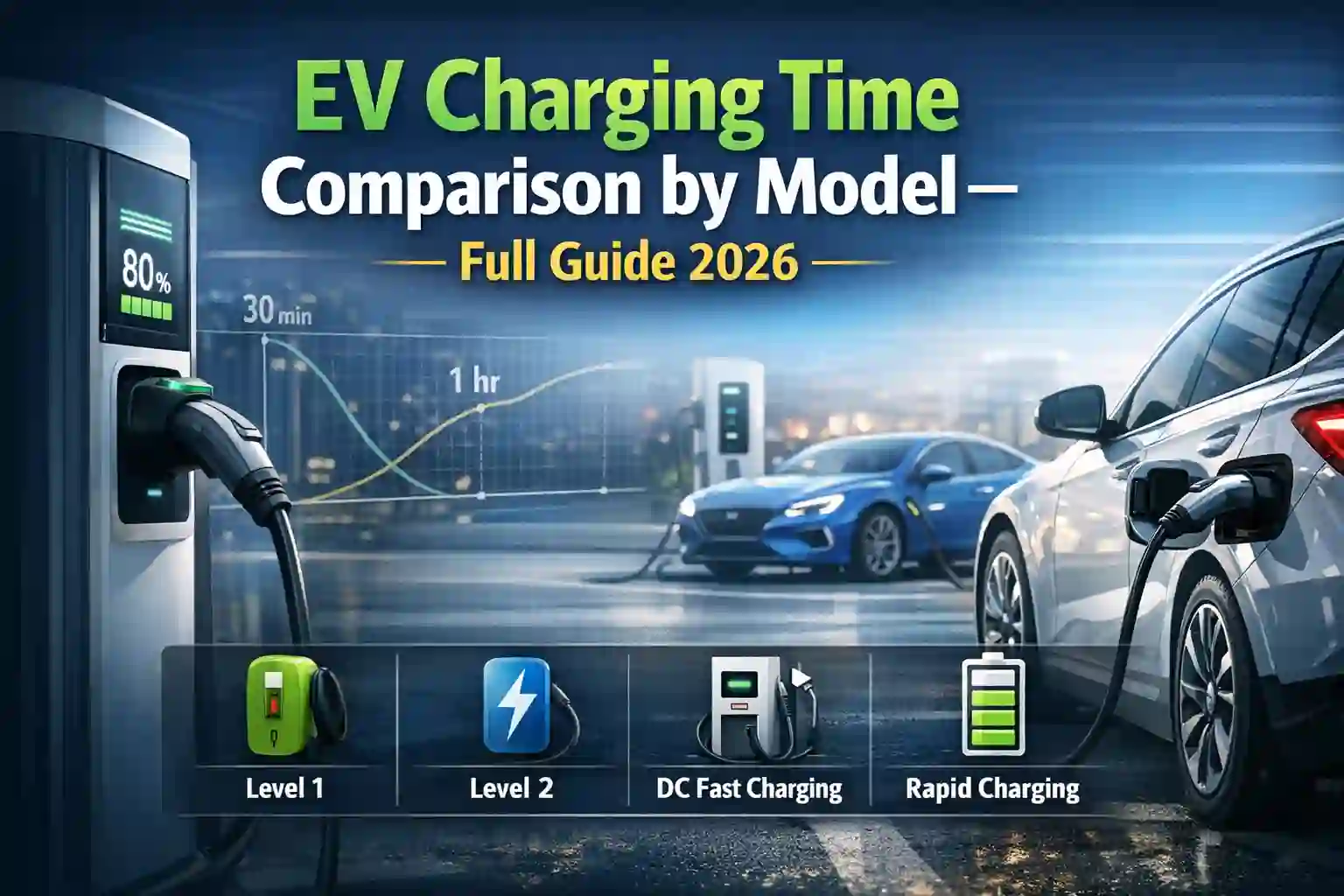
EV Charging Time Comparison by Model – Full Guide 2026
Electric vehicles are rapidly transforming the global automotive industry, and Pakistan is also stepping into the electric mobility era. One of the most important concerns for buyers and EV enthusiasts is charging time. Understanding how long it takes to charge different EV models helps users make informed decisions based on their lifestyle, daily commute, and access to charging infrastructure.
This complete guide on EV Charging Time Comparison by Model 2026 covers everything you need to know, including charging types, time differences across popular EVs, factors affecting charging speed, and practical tips to optimize charging efficiency.
What is EV Charging Time and Why It Matters
EV charging time refers to the duration required to recharge an electric vehicle’s battery from a certain level to full capacity. Unlike petrol vehicles that can refuel in minutes, EV charging depends on battery size, charger type, and vehicle compatibility.
Charging time matters because it directly affects:
- Daily usability of the vehicle
- Long-distance travel planning
- Convenience for home or public charging
- Overall EV ownership experience
For example, a vehicle that takes 8 hours to charge at home may only need 30 minutes with a fast charger.

Types of EV Charging and Their Impact on Charging Time
Understanding charging levels is essential before comparing EV models.
Level 1 Charging (Slow Charging)
- Uses standard household outlet
- Power output: 2–3 kW
- Charging time: 8 to 24 hours
This method is suitable for overnight charging but is not practical for quick top-ups.

Level 2 Charging (Home and Public Charging)
- Uses dedicated EV charger
- Power output: 7–22 kW
- Charging time: 3 to 8 hours
Level 2 charging is the most common and ideal for daily use.

DC Fast Charging (Rapid Charging)
- Available at commercial stations
- Power output: 50 kW to 350 kW
- Charging time: 20 to 60 minutes
This is the fastest method and is ideal for highways and long trips.

EV Charging Time Comparison by Model 2026
Below is a comparison of popular electric vehicles and their approximate charging times using different charging methods.
Tesla Model 3 Charging Time Comparison
- Battery: ~60–82 kWh
- Level 1: 20+ hours
- Level 2: 6 to 8 hours
- DC Fast Charging: 25–35 minutes (80%)
Tesla vehicles are known for their efficient battery management and fast charging capability through superchargers.
Nissan Leaf Charging Time Comparison
- Battery: 40–62 kWh
- Level 1: 15–20 hours
- Level 2: 6 to 7 hours
- DC Fast Charging: 40–60 minutes
The Nissan Leaf remains a popular choice due to affordability and decent charging performance.
Hyundai Ioniq 5 Charging Time Comparison
- Battery: 58–77.4 kWh
- Level 1: 18–22 hours
- Level 2: 5 to 7 hours
- DC Fast Charging: 18–25 minutes
This model supports ultra-fast charging, making it one of the fastest charging EVs in 2026.
Kia EV6 Charging Time Comparison
- Battery: 58–77.4 kWh
- Level 1: 18–22 hours
- Level 2: 5 to 7 hours
- DC Fast Charging: 18–25 minutes
Kia EV6 shares similar technology with Ioniq 5, offering impressive fast charging speeds.
MG ZS EV Charging Time Comparison (Popular in Pakistan)
- Battery: ~50–72 kWh
- Level 1: 20+ hours
- Level 2: 6 to 8 hours
- DC Fast Charging: 40–60 minutes
MG ZS EV is widely available in Pakistan and offers practical charging times for daily users.
Audi e-tron Charging Time Comparison
- Battery: ~95 kWh
- Level 1: 24+ hours
- Level 2: 8 to 10 hours
- DC Fast Charging: 30–40 minutes
Luxury EVs like Audi e-tron have larger batteries, which increases charging time but also provides longer range.
Factors Affecting EV Charging Time
Charging time is not fixed and can vary depending on several factors.
Battery Capacity
Larger batteries take longer to charge but provide more driving range.
Charger Power Output
Higher kW chargers significantly reduce charging time.
State of Charge
Charging from 20% to 80% is faster than charging from 80% to 100%.
Temperature Conditions
Extreme heat or cold can slow down charging speed.
Vehicle Software and Battery Management
Modern EVs optimize charging speeds using advanced battery management systems.
EV Charging Time in Pakistan – Current Scenario 2026
Pakistan is gradually developing EV infrastructure, with charging stations being installed in major cities like Lahore, Karachi, and Islamabad.
Key highlights:
- Limited but growing fast-charging network
- Home charging is still the primary method
- Government incentives promoting EV adoption
- New policies encouraging private charging stations
For most users in Pakistan, Level 2 home charging remains the most practical solution.
How to Reduce EV Charging Time
To improve charging efficiency, follow these tips:
Use Fast Chargers When Needed
DC fast charging is ideal for emergencies and long-distance travel.
Avoid Full Charging Daily
Charging between 20% and 80% is faster and better for battery health.
Install a Home Level 2 Charger
This significantly reduces overnight charging time.
Charge During Optimal Temperatures
Moderate weather improves battery performance.
Keep Software Updated
EV manufacturers release updates that improve charging efficiency.
EV Charging Time vs Fuel Refueling – Key Difference
While petrol cars take only a few minutes to refuel, EVs compensate with:
- Lower running costs
- Environmental benefits
- Convenience of home charging
Over time, charging infrastructure improvements will further reduce the gap.
Future of EV Charging in 2026 and Beyond
The future of EV charging looks promising with advancements such as:
- Ultra-fast 350 kW chargers
- Wireless charging technology
- Battery swapping systems
- Solar-powered charging stations
These innovations will make EV charging faster and more convenient than ever before.
Conclusion – EV Charging Time Comparison by Model 2026
EV charging time varies significantly depending on the vehicle model, battery size, and charging method. While some EVs take hours to charge at home, fast charging technology can reduce this time to under 30 minutes.
For users in Pakistan, choosing the right EV depends on balancing charging speed, infrastructure availability, and daily driving needs. Models like Hyundai Ioniq 5 and Kia EV6 lead in fast charging, while MG ZS EV offers a practical balance for local users.
As EV infrastructure expands in 2026, charging time will become less of a concern, making electric vehicles a more convenient and attractive option for everyone.
FAQs – EV Charging Time Comparison by Model 2026
1. How long does it take to charge an EV fully?
It depends on the charger. Level 1 can take 20 hours, Level 2 takes 6–8 hours, and fast charging can take 20–60 minutes.
2. Which EV charges the fastest in 2026?
Models like Hyundai Ioniq 5 and Kia EV6 offer ultra-fast charging, reaching 80% in under 20–25 minutes.
3. Is EV charging expensive in Pakistan?
Charging costs are lower than petrol, especially when charging at home.
4. Can I charge my EV at home?
Yes, most EV owners use home charging with Level 1 or Level 2 chargers.
5. Does fast charging damage the battery?
Occasional fast charging is safe, but frequent use may slightly reduce battery life over time.