Pakistan Imposes Up to 31% Duty on Bike Parts, Raising Industry Concerns
Pakistan has approved an increase in additional customs duty on selected imported motorcycle parts, raising concerns among industry experts, manufacturers, importers, and motorcycle users. The decision aims to support local manufacturing and encourage companies to produce more components within the country. However, critics believe that higher import duties could increase production costs and create challenges for Pakistan’s automotive industry.
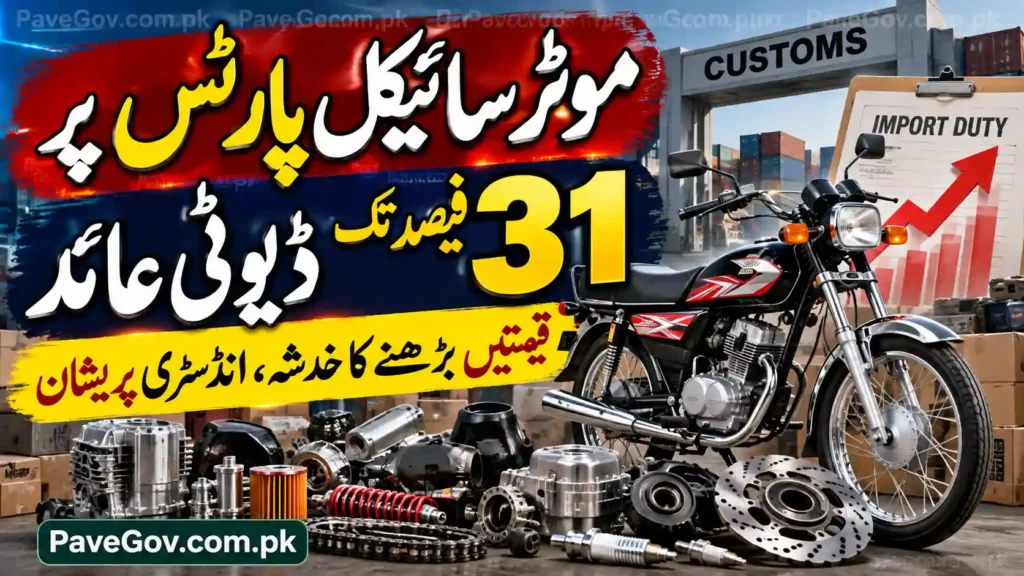
According to reports published on October 9 and 10, 2026, the Economic Coordination Committee (ECC) approved an increase in additional customs duty on certain motorcycle parts and radial tyres. The additional duty on specified motorcycle parts imported by local manufacturers will rise from 11% to 31%, while the rate on certain imported motorcycle parts and tyres manufactured locally will increase from 4% to 11%. The changes have triggered a debate over Pakistan’s tariff policy and the future of the motorcycle industry.

What Is the New Duty on Motorcycle Parts in Pakistan?
The government has approved higher customs duties on imported bike parts in Pakistan as part of its efforts to promote domestic production. The decision targets selected components that are also manufactured locally.
The revised additional customs duty rates are as follows:
- Selected locally manufactured motorcycle parts: The additional customs duty will increase from 4% to 11% for the specified import category.
- Motorcycle parts imported by local manufacturers: The additional customs duty will increase from 11% to 31% for the specified components.
- Selected radial tyres: The additional customs duty will increase from 4% to 11% where the relevant locally manufactured category applies.
These rates refer to additional customs duty, not the total tax charged on imports. Other applicable customs duties and taxes may also affect the final import cost.
The government says the measure is intended to support local manufacturers and encourage companies to purchase components from Pakistani suppliers instead of depending heavily on imported products.

Which Motorcycle Parts Are Affected by the New Duty?
The reported list includes several components used in motorcycle assembly and manufacturing. These include:
- Licence plates and brackets
- Side reflectors
- Front decorative components
- Foot plates
- Wheel assemblies
- Motorcycle windshields
- Seats
- Toolboxes
- Centre covers
- Other specified plates and components
The revised rate applies to the relevant tariff categories rather than every motorcycle component available in Pakistan. Importers and manufacturers should therefore check the applicable Pakistan Customs Tariff classification and official notification before calculating their costs.
The treatment of goods imported from China may also differ because of the Pakistan-China Free Trade Agreement. Reports indicate that eligible imports covered by the relevant agreement may retain preferential treatment, subject to the applicable conditions.

Why Has Pakistan Increased Import Duties on Bike Parts?
The main objective behind the decision is to encourage local motorcycle parts manufacturing and reduce dependence on imported components.
Pakistan has a large motorcycle market, and local companies assemble motorcycles using a combination of domestically produced and imported parts. The government wants manufacturers to increase local sourcing and create more opportunities for Pakistani businesses.
Higher duties can make selected imported components more expensive compared with locally produced alternatives. In theory, this may encourage motorcycle companies to purchase parts from domestic suppliers.
The policy could also create opportunities for local businesses to invest in manufacturing facilities, improve production capacity, and develop new technical skills.
However, the success of this approach depends on whether local suppliers can provide parts at competitive prices and maintain acceptable quality standards.

Industry Experts Raise Concerns Over Tariff Policy
The new duty structure has attracted criticism from within Pakistan’s tariff-policy framework.
Dr Rubina Athar, a member of the National Tariff Policy Board who was involved in formulating the country’s tariff policy, questioned the decision to increase duties without first presenting the proposal to the board.
She argued that the move could conflict with the government’s wider objective of reducing trade barriers and improving industrial competitiveness.
The National Tariff Policy 2025–30 emphasises tariff rationalisation and improved competitiveness across the economy. The latest motorcycle parts decision has therefore raised questions about how individual sector-specific measures fit within the broader policy direction.
Critics also argue that protecting local industries through higher duties does not automatically make them more productive. If manufacturers face limited competition for an extended period, they may have fewer incentives to reduce costs, improve technology, or increase efficiency.
Supporters of the duty increase, however, believe that local businesses need protection to develop manufacturing capacity and compete with imported products.
Will Motorcycle Prices Increase in Pakistan?
One of the biggest questions for consumers is whether the new bike parts duty in Pakistan will increase motorcycle prices.
A direct price increase has not been confirmed for every motorcycle model. The actual impact will depend on the components affected, the quantity imported, existing inventory, local alternatives, and the way manufacturers manage additional costs.
If a company imports components that fall under the higher duty category, its production costs may increase. Manufacturers could absorb some of the additional expense, negotiate better prices with suppliers, or pass part of the increase on to customers.
If manufacturers pass higher costs on to buyers, consumers could face increased prices for certain motorcycles or replacement parts.
Motorcycle repair shops and spare-parts dealers may also experience changes in wholesale prices if the revised duties affect the components they purchase.
However, it would be premature to predict a specific price increase without official company announcements or verified market data.
Impact on Motorcycle Manufacturers and Importers
The decision could have different effects on companies operating in Pakistan’s motorcycle industry.
1. Higher Production Costs
Manufacturers that rely on imported components covered by the new duty may face higher input costs. This could affect their operating expenses, particularly if suitable local alternatives are unavailable.
2. Greater Demand for Local Suppliers
Domestic parts manufacturers may benefit if motorcycle assembly companies shift their purchases towards locally produced components.
This could encourage investment in machinery, technology, and manufacturing facilities.
3. Challenges for Small Businesses
Small importers and spare-parts distributors may find it difficult to manage changing costs, especially when their profit margins are limited. Businesses that depend on imported components should review their sourcing and pricing arrangements.
4. Increased Pressure to Improve Efficiency
Motorcycle manufacturers may need to improve production planning, control expenses, and develop stronger relationships with local suppliers to remain competitive.
The long-term impact will depend on how quickly Pakistan’s domestic automotive supply chain can respond to the policy change.
Can Higher Duties Strengthen Pakistan’s Local Industry?
Higher import duties can provide temporary protection to domestic producers, but long-term industrial growth requires more than tariff barriers.
Local manufacturers need access to affordable financing, modern machinery, reliable electricity, skilled workers, and quality raw materials. They also need stable government policies that allow businesses to make investment decisions with confidence.
If Pakistani companies can produce motorcycle parts at competitive prices and meet industry standards, increased local sourcing could support employment and industrial development.
On the other hand, if domestic production remains expensive or insufficient, manufacturers may continue to depend on imports while paying higher duties. This could increase costs without delivering the expected benefits to consumers or the wider economy.
A balanced approach should therefore combine support for local businesses with stronger competition, better technology, and clear performance targets.
What Should Motorcycle Buyers Know?
People planning to purchase a motorcycle do not need to assume that all bike prices will rise immediately because of the new duty decision.
Buyers should compare prices from authorised dealers, check the latest company announcements, and review the availability of spare parts before making a purchase.
Existing motorcycle owners should also avoid assuming that every replacement component will become more expensive. The effect will depend on whether a particular part falls within the affected import category and whether suppliers adjust their prices.
For businesses, it is important to confirm the latest official customs notification before changing product prices or calculating import expenses.
Pakistan Bike Parts Duty 2026 Conclusion
Pakistan’s decision to approve up to 31% additional customs duty on selected motorcycle parts has renewed the debate over protecting domestic manufacturing and maintaining a competitive automotive industry.
The government aims to encourage local production, increase domestic sourcing, and reduce reliance on imported components. However, industry experts have raised concerns that higher tariffs could increase manufacturing costs and conflict with the country’s wider trade liberalisation objectives.
The actual outcome will depend on the implementation of the revised duty structure, the availability of locally produced alternatives, and the response of motorcycle manufacturers and suppliers.
For consumers, the key issue is whether the policy strengthens local production without making motorcycles and essential spare parts less affordable. Clear implementation rules, competitive domestic suppliers, and consistent tariff policies will be important in determining whether the decision achieves its intended goals.