Latest News: Rs 1.7 Billion Vehicle Testing Institute Planned
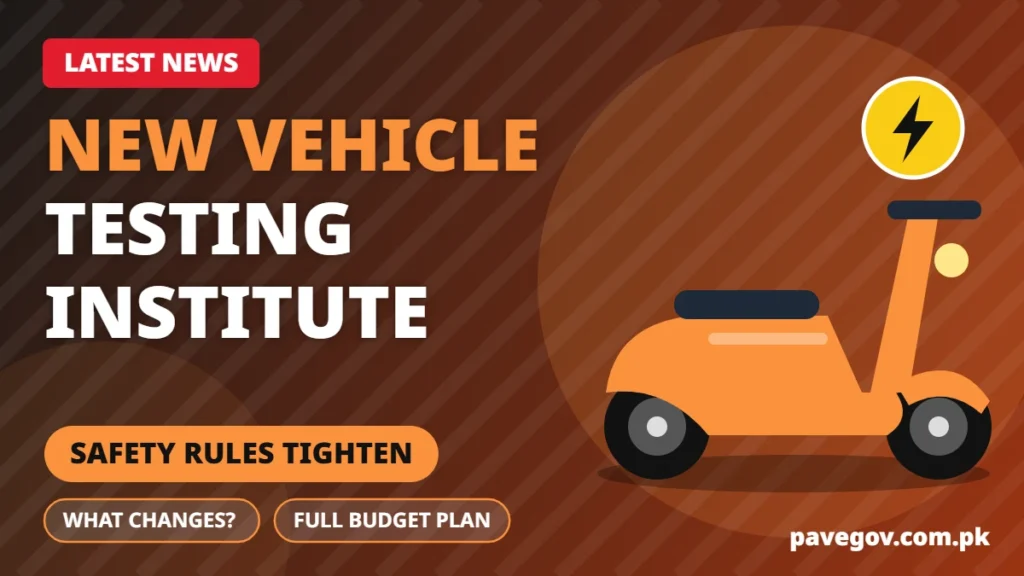
Pakistan is planning a major step to make vehicles on its roads safer. Under the draft Autos and Auto Parts Manufacturing Policy 2026–31, the government wants to set up a dedicated Pakistan Automotive Testing Institute (PATI) with a proposed budget of Rs. 1.7 billion.
The new institute will test and approve vehicles against safety, quality and environmental standards before they are sold. For buyers of cars, bikes and electric vehicles, this could mean better build quality and fewer unsafe products in the market.
Pakistan Automotive Testing Institute: What Is PATI?
PATI will act as a central facility for vehicle type approval. Simply put, before a new model is allowed on the road, it will have to prove that it meets the required standards. According to Section 4.5.7 of the draft policy, the Ministry of Industries and Production and the Engineering Development Board (EDB) will be responsible for setting it up.
The government does not plan to build every type of testing lab inside PATI. It will focus on facilities that private third-party testing companies cannot set up on a commercial basis. Other checks may be handled by accredited private labs.
Rs. 1.7 Billion Budget Plan
The draft policy spreads the PATI budget over three financial years:
| Financial Year | Proposed Allocation |
|---|---|
| 2026–27 | Rs. 200 million |
| 2027–28 | Rs. 500 million |
| 2028–29 | Rs. 1 billion |
| Total | Rs. 1.7 billion |
Most of the money is planned for the third year, which suggests the main labs and equipment will come online around 2028–29.

45 More Vehicle Safety Regulations Coming
PATI is part of a wider push for vehicle safety standards. Pakistan joined the UNECE 1958 Agreement in April 2020 and has already adopted 62 WP.29 regulations. These cover areas like braking systems, airbags and occupant protection for both imported and locally assembled vehicles.
Now the government plans to adopt 45 more regulations by the fourth quarter of 2028. The draft policy also calls for a legal framework for:
- Conformity assessment – checking that production vehicles match the approved design
- Market surveillance – random checks on vehicles already being sold
- Vehicle recalls – a formal system to call back faulty models
- Use of internationally accredited third-party auditors where needed
What PATI Means for Electric Bikes and EVs
The local market is now full of new electric bikes, scooties and small EVs, many of them assembled from imported kits. Quality varies a lot, especially for batteries, brakes and wiring. A national testing body can help set clear rules so that only safe and reliable models reach buyers.
For riders, this could mean better battery safety, stronger brakes and honest range claims. It may also help buyers of government scheme bikes, since approved models would meet a common standard. Learn more about the PM electric bike scheme, check the eligibility criteria and documents required, and follow our how to apply guide. You can compare models on the electric bike price in Pakistan and electric scooty price pages, or estimate savings with the PAVE subsidy calculator.
Part of the New Auto Policy 2026–31
PATI is one piece of the bigger Auto Policy 2026–31, which also proposes new sales tax rates, a strong push for new energy vehicles and changes to local manufacturing rules. You can read the wider picture in our report on the new auto policy 2026-31. Since this is still a draft, the final budget and timeline may change once the policy is notified. The details were first reported by ProPakistani, citing PakWheels.
Also Read: Nora EV Official Prices Finally Revealed | McDonald’s to Add EV Charging at Restaurants | New Sales Tax Rates for EVs and Hybrids | Karachi to Get New Electric and Double-Decker Buses
Frequently Asked Questions
What is the Pakistan Automotive Testing Institute?
PATI is a proposed national facility for vehicle type approval and testing against safety, quality and environmental standards.
How much will PATI cost?
The draft auto policy proposes Rs. 1.7 billion: Rs. 200 million in 2026–27, Rs. 500 million in 2027–28 and Rs. 1 billion in 2028–29.
Who will set up PATI?
The Ministry of Industries and Production and the Engineering Development Board (EDB) will be responsible for establishing it.
How many new vehicle safety rules will Pakistan adopt?
The government plans to adopt 45 more UNECE WP.29 regulations by the fourth quarter of 2028, on top of the 62 already adopted.