Check the List of Cities Where Punjab Government Is Planning to Ban Vehicles
The Punjab Government is preparing a major policy aimed at reducing air pollution and improving environmental quality across the province. According to the latest proposal, authorities are considering restrictions on old and environmentally harmful vehicles in several major cities. The plan is part of Punjab’s broader clean air strategy, which includes stricter vehicle inspections, emission testing, and the gradual phase-out of aging vehicles.
If approved, the policy will mainly target vehicles that produce excessive emissions and fail to meet environmental standards. The initiative is expected to be implemented in phases, giving vehicle owners enough time to comply with the new regulations.
This article explains the proposed notification, the expected list of affected cities, the purpose behind the policy, possible exemptions, and what vehicle owners should do to prepare.
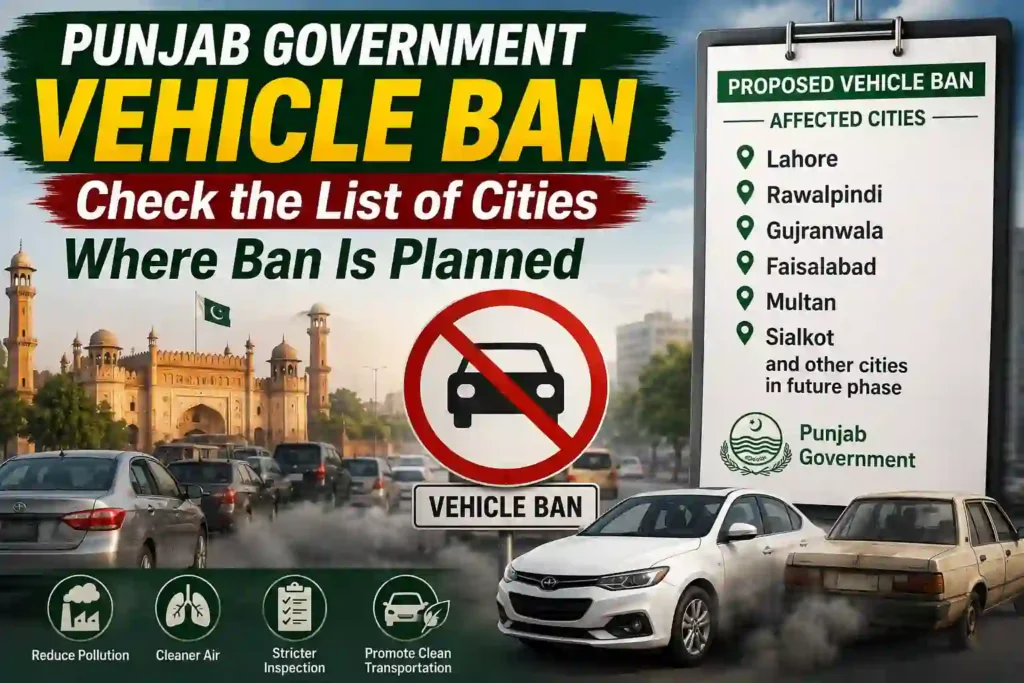
Punjab Government’s New Vehicle Ban Proposal Explained
The Punjab Government vehicle ban proposal is designed to tackle worsening air pollution, especially in urban areas where smog has become a serious health concern during winter months.
Instead of introducing an immediate province-wide ban, the government plans to implement restrictions gradually in cities experiencing the highest pollution levels. Officials believe that reducing the number of older, smoke-emitting vehicles will significantly improve air quality and public health.
The proposal also supports Pakistan’s long-term environmental goals by encouraging the use of cleaner transportation and modern vehicles.
What Does the Proposed Notification Say?
According to the proposed notification, the government is considering several measures, including:
- Restricting old vehicles that exceed the approved age limit.
- Banning vehicles that fail emission testing.
- Increasing environmental inspections.
- Introducing stricter fitness certificate requirements.
- Promoting electric and hybrid vehicles.
- Strengthening enforcement against smoke-emitting vehicles.
- Launching awareness campaigns for vehicle owners.
It is important to note that the notification represents a proposed policy. Final implementation will begin only after official approval and notification by the relevant provincial authorities.
Proposed List of Cities Where Vehicle Restrictions May Be Introduced
The following cities are expected to be included in the initial phase of the Punjab Government vehicle ban plan because they experience higher levels of traffic congestion and air pollution.
Lahore
Lahore remains the province’s most polluted city during the smog season. The city is expected to receive the highest priority under the proposed policy due to its severe air quality challenges.
Possible measures include:
- Restrictions on older vehicles.
- Increased emission testing.
- More roadside inspections.
- Strict action against smoke-emitting vehicles.
Rawalpindi
Rawalpindi has experienced increasing traffic volumes in recent years. Authorities may introduce stricter environmental regulations to reduce vehicle emissions across the city.
Gujranwala
Industrial activities and heavy traffic make Gujranwala one of the cities under consideration. Older commercial vehicles may receive special attention during inspections.
Faisalabad
As one of Pakistan’s largest industrial hubs, Faisalabad is expected to become part of the first implementation phase. Officials are focusing on reducing pollution generated by aging commercial transport.
Multan
Growing urban development and increasing vehicle numbers have made Multan another likely candidate for the policy.
Sialkot
Due to industrial expansion and heavy transport movement, Sialkot may also see stricter environmental enforcement under the proposed plan.
Other Cities Under Consideration Check the List of Cities Where Punjab Government Is Planning to Ban Vehicles
The government may later expand the policy to additional districts, depending on pollution levels and implementation success.
Possible future cities include:
- Bahawalpur
- Sargodha
- Sheikhupura
- Gujrat
- Okara
- Jhelum
- Dera Ghazi Khan
Authorities have clarified that future expansion will depend on environmental monitoring and policy outcomes.
Why Is Punjab Introducing This Policy?
The main objective behind the Punjab Government vehicle ban proposal is to reduce dangerous air pollution that affects millions of residents every year.
Key goals include:
- Improving air quality.
- Reducing smog.
- Lowering carbon emissions.
- Protecting public health.
- Encouraging cleaner transportation.
- Supporting climate-friendly policies.
Experts believe that older vehicles contribute significantly to urban pollution because they often lack modern emission control systems.
Which Vehicles Could Be Affected?
Although the final rules have not yet been announced, the policy is expected to focus on:
- Older petrol vehicles.
- Older diesel vehicles.
- Smoke-emitting commercial vehicles.
- Vehicles failing emission tests.
- Unfit public transport vehicles.
- Vehicles without valid fitness certificates.
The final eligibility criteria will be confirmed once the government issues the official notification.
Will All Old Vehicles Be Banned?
No.
Current information suggests that the government is not planning an immediate blanket ban on every old vehicle.
Instead, authorities are expected to focus on vehicles that:
- Produce excessive smoke.
- Fail environmental inspections.
- Do not meet fitness standards.
- Pose higher environmental risks.
Vehicle owners who maintain their vehicles properly may still be allowed to continue operating, depending on the final regulations.
Importance of Vehicle Emission Testing
The proposed policy places strong emphasis on vehicle emission testing.
Owners may be required to:
- Undergo regular emission inspections.
- Obtain updated fitness certificates.
- Repair vehicles exceeding pollution limits.
- Maintain proper engine performance.
Regular maintenance not only helps comply with government regulations but also improves fuel efficiency.
How Will the Policy Help Reduce Smog?
Punjab experiences severe smog every winter due to multiple contributing factors, including:
- Vehicle emissions.
- Industrial pollution.
- Crop residue burning.
- Construction dust.
- Weather conditions.
By removing highly polluting vehicles from the roads, the government hopes to reduce one of the major contributors to urban air pollution.
Impact on Vehicle Owners
Many vehicle owners are concerned about how the proposal may affect them.
Possible impacts include:
- Mandatory emission testing.
- Higher maintenance requirements.
- Vehicle fitness inspections.
- Repair costs for older vehicles.
- Replacement of severely polluting vehicles.
However, the government is expected to provide a transition period before implementing strict enforcement.
Commercial Transport May Face Additional Checks
Commercial transport vehicles generally travel longer distances and often produce higher emissions.
The proposed policy may require:
- More frequent inspections.
- Stricter smoke testing.
- Updated fitness certification.
- Compliance with environmental standards.
Transport companies may also be encouraged to modernize their fleets.
Electric and Hybrid Vehicles May Benefit
One major objective of the proposal is to encourage cleaner transportation.
Owners of:
- Electric vehicles (EVs)
- Hybrid vehicles
- Low-emission vehicles
may benefit from future incentives introduced by the provincial government.
Punjab has already announced several initiatives supporting environmentally friendly transport, and this proposal aligns with those long-term goals.
What Should Vehicle Owners Do Now?
Although the policy has not yet been officially implemented, vehicle owners should start preparing.
Recommended steps include:
- Service your vehicle regularly.
- Repair engine problems immediately.
- Reduce excessive smoke emissions.
- Renew vehicle fitness certificates.
- Keep registration documents updated.
- Follow official government announcements.
Preparing early can help avoid penalties once the regulations come into effect.
Implementation Timeline
The government has not yet announced a confirmed implementation date.
The expected process includes:
- Final approval of the policy.
- Official notification.
- Public awareness campaign.
- Grace period for compliance.
- Gradual enforcement across selected cities.
- Expansion to additional districts if necessary.
Authorities are expected to share further details after consultations with environmental experts and transport departments.
Frequently Asked Questions
Is the vehicle ban already in effect?
No. The proposal is currently under consideration. The government will announce the official implementation date after final approval.
Which cities are expected to be affected first?
The initial phase is expected to include Lahore, Rawalpindi, Gujranwala, Faisalabad, Multan, and Sialkot, with more cities possibly added later.
Will every old vehicle be banned?
Not necessarily. The focus is expected to be on vehicles that fail emission standards or produce excessive pollution.
Will commercial vehicles also be inspected?
Yes. Commercial transport is expected to face stricter inspections because of its higher contribution to emissions.
What should vehicle owners do now?
Owners should maintain their vehicles, complete emission testing when required, and monitor official government notifications for updates.
Final Thoughts
The proposed Punjab Government vehicle ban marks an important step toward improving air quality and reducing pollution across the province. While the policy is still awaiting final approval, it reflects the government’s commitment to tackling smog and promoting environmentally responsible transportation.
Vehicle owners should remember that the proposal is expected to be implemented gradually rather than all at once. Those who keep their vehicles properly maintained and comply with future emission standards are likely to face fewer challenges when the new regulations take effect.