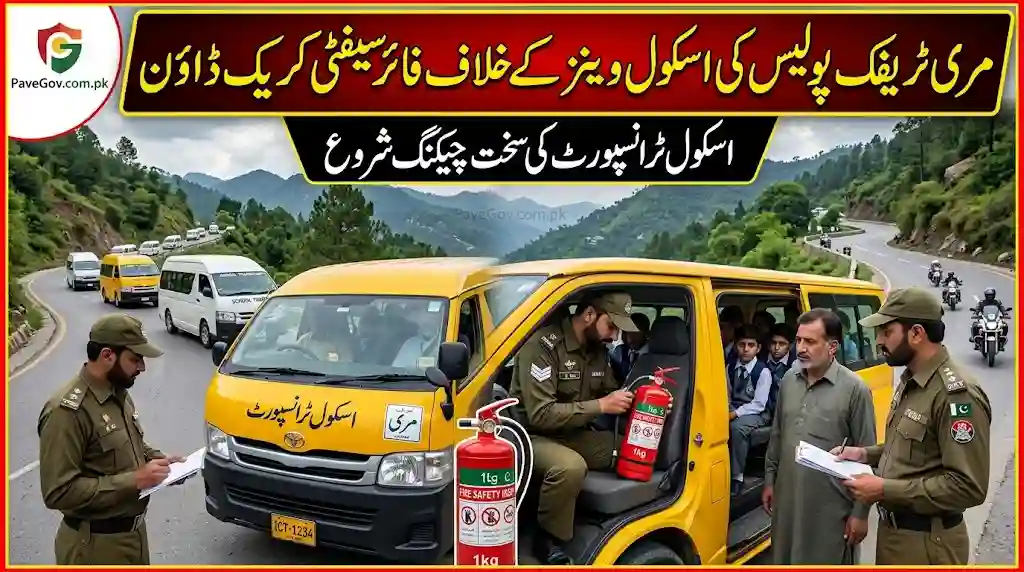
Murree Traffic Police Launch School Transport Safety Drive Against Fire Hazards
Murree Traffic Police have launched a school transport safety drive to reduce fire-related risks in vehicles used for transporting students. The campaign focuses on school vans, buses, and other student transport vehicles operating in Murree. Officials are expected to check important safety arrangements and encourage drivers, vehicle owners, and school administrations to follow safety rules.
The initiative is important because school transport vehicles carry children on a daily basis. A small technical fault, fuel leakage, electrical problem, or unsafe modification can create a serious emergency. Through the school transport safety campaign, traffic authorities aim to improve awareness and promote safer transportation practices.
Why the School Transport Safety Drive Is Important
School-going children depend on transport services every day. Many students travel in vans and buses during busy morning and afternoon hours. These vehicles should therefore have proper safety equipment and should be maintained regularly.
Fire hazards can occur because of several reasons. Electrical wiring problems, overloaded circuits, damaged batteries, fuel leakage, poor maintenance, and unsafe heating systems can increase the risk of a vehicle fire.
The Murree Traffic Police safety initiative highlights the importance of preventive measures. Instead of waiting for an accident or fire incident, vehicle owners can identify possible problems through regular inspections.
The campaign also provides an opportunity to create awareness among school van drivers, transport operators, parents, and school management.

Inspection of School Vans and Buses
As part of the school transport inspection, traffic officials may examine vehicles used to transport students. The inspection can focus on the overall condition of the vehicle and the availability of basic emergency equipment.
Important areas can include electrical wiring, battery connections, fuel systems, doors, windows, seats, and emergency exits. Officials can also check whether vehicles are being used safely and whether unnecessary modifications have been made.
Vehicle owners should take these inspections seriously because regular maintenance can help identify dangerous faults before they become major problems.
A school van should not only be mechanically operational but should also provide a safe environment for children.

Fire Extinguishers in School Transport Vehicles
One of the most important safety measures is the availability of a suitable fire extinguisher inside school transport vehicles. Drivers should know where the extinguisher is located and how to use it during an emergency.
Simply keeping an extinguisher inside a vehicle may not be enough. It should be accessible, properly maintained, and suitable for possible vehicle fires.
Drivers should also understand basic emergency procedures. If smoke or fire appears, the vehicle should be stopped in a safe location whenever possible, and students should be moved away from the vehicle.
Schools and transport operators can also arrange basic fire safety training for drivers and transport staff.

Checking Electrical Wiring and Batteries
Electrical faults are among the potential causes of vehicle fires. Damaged wires, loose connections, exposed cables, and poorly installed accessories can create safety risks.
School transport operators should arrange regular inspections of electrical systems. Batteries should also be securely installed, while wiring should be protected from damage.
Installing additional lights, sound systems, charging equipment, or other electrical accessories without proper technical work can create unnecessary risks.
A qualified mechanic or electrician should inspect electrical modifications where required.

Fuel Leakage and Engine Safety
Fuel-related problems can become dangerous when combined with heat or electrical sparks. For this reason, fuel leakage prevention should be an important part of school vehicle maintenance.
Drivers should report unusual fuel smells, visible leakage, or engine problems immediately. Vehicle owners should not continue operating a vehicle when a serious mechanical or fuel-related fault is suspected.
Regular engine inspections can help detect damaged pipes, loose connections, and other problems.
Maintaining the engine compartment in a clean and safe condition is another useful preventive measure.
Role of School Administrations
Schools have an important responsibility when they hire or use private transport services. Management should make sure that vehicles used for students are properly maintained and operated by responsible drivers.
Schools can develop a school transport safety checklist covering vehicle condition, emergency equipment, driver documents, seating arrangements, and basic fire safety.
Transport staff should also know what to do if a vehicle develops smoke, catches fire, or experiences another emergency while students are inside.
Clear emergency procedures can help reduce confusion during an unexpected situation.
Drivers Must Remain Alert
Drivers are responsible for the safe operation of school transport vehicles. They should inspect their vehicles regularly and report mechanical problems instead of ignoring them.
Before starting a school route, drivers can check important areas such as tires, brakes, lights, doors, mirrors, and visible signs of mechanical or electrical problems.
Drivers should also avoid carrying unauthorized fuel containers or other materials that may increase fire risks.
Safe driving is equally important. Sudden braking, speeding, and careless driving can create additional dangers for students.
Parents Can Also Play a Role
Parents should remain aware of the condition of the transport service used by their children. They can ask schools or transport providers about basic safety arrangements.
Parents may also encourage children to follow safety instructions while traveling. Students should know where emergency exits are located and should listen to the driver or transport staff during an emergency.
Children should never play with electrical equipment or interfere with vehicle controls.
Basic awareness can make it easier for students to respond calmly if an emergency occurs.
Emergency Exit and Evacuation Awareness
A school vehicle should provide students with a practical way to leave the vehicle during an emergency. Doors and emergency exits should not be blocked by luggage, seats, or other objects.
Schools can teach students simple emergency evacuation procedures. For example, children should leave the vehicle quickly without pushing others and move to a safe distance.
Drivers and transport staff should also understand how to guide students during an evacuation.
Regular awareness sessions can help children understand what to do without creating unnecessary fear.
Murree’s Road Conditions Make Safety Important
Murree has hilly roads, turns, slopes, and changing weather conditions. School transport vehicles operating in such an environment need careful maintenance and responsible driving.
Vehicle safety becomes even more important when roads are crowded or weather conditions reduce visibility.
Drivers should follow traffic rules and adjust their driving according to road and weather conditions. Schools should also ensure that transport arrangements are properly managed during difficult weather.
The Murree traffic safety initiative can help increase attention toward these issues among school transport operators.
Avoid Overloading School Vehicles
Overloading is another issue that can affect student safety. School vans and buses should not carry more passengers than the vehicle is designed or legally permitted to carry.
Overcrowding can make evacuation difficult during a fire or other emergency. Students should have adequate space to sit safely, and vehicle doors should remain accessible.
Transport operators should therefore follow applicable passenger and safety requirements.
Importance of Regular Vehicle Maintenance
Regular maintenance is one of the simplest ways to reduce vehicle-related risks. School transport operators should maintain a schedule for checking engines, brakes, tires, electrical systems, batteries, fuel lines, and other important components.
A school van safety inspection should not be treated as a one-time activity. Vehicles require continuous maintenance throughout the academic year.
Keeping maintenance records can also help schools and transport providers track repairs and identify repeated mechanical problems.
Public Awareness Is a Key Part of the Campaign
Traffic enforcement alone cannot solve every transport safety issue. Public awareness is equally important.
Drivers, schools, parents, and students should understand why fire safety measures are necessary. Awareness can encourage people to report unsafe vehicles and correct problems before an emergency occurs.
The campaign can therefore serve as an opportunity to promote a stronger child safety culture in school transportation.
What School Transport Operators Should Check
Before operating a school vehicle, transport operators should pay attention to several basic areas:
- Check the vehicle’s electrical wiring.
- Inspect the battery and connections.
- Look for possible fuel leakage.
- Keep a suitable fire extinguisher available.
- Ensure doors and emergency exits are accessible.
- Avoid unnecessary electrical modifications.
- Do not overload the vehicle.
- Maintain brakes, tires, lights, and mirrors.
- Keep the engine and surrounding areas properly maintained.
- Train drivers in basic fire emergency procedures.
These measures can help reduce avoidable risks and improve student safety.
Murree Traffic Police Conclusion
The Murree Traffic Police school transport safety drive highlights the importance of protecting students from fire hazards and other vehicle-related risks. Regular inspections, proper maintenance, fire extinguishers, safe electrical systems, and trained drivers can all contribute to safer school transportation.
The responsibility for student safety is shared by traffic authorities, schools, transport operators, drivers, and parents. A coordinated approach can help identify hazards before they turn into emergencies.
For school transport providers, the key message is simple: vehicle maintenance and fire safety should be treated as essential parts of daily operations, not as formalities. By following safety practices and responding quickly to mechanical problems, schools and transport operators can create a safer travelling environment for children in Murree.