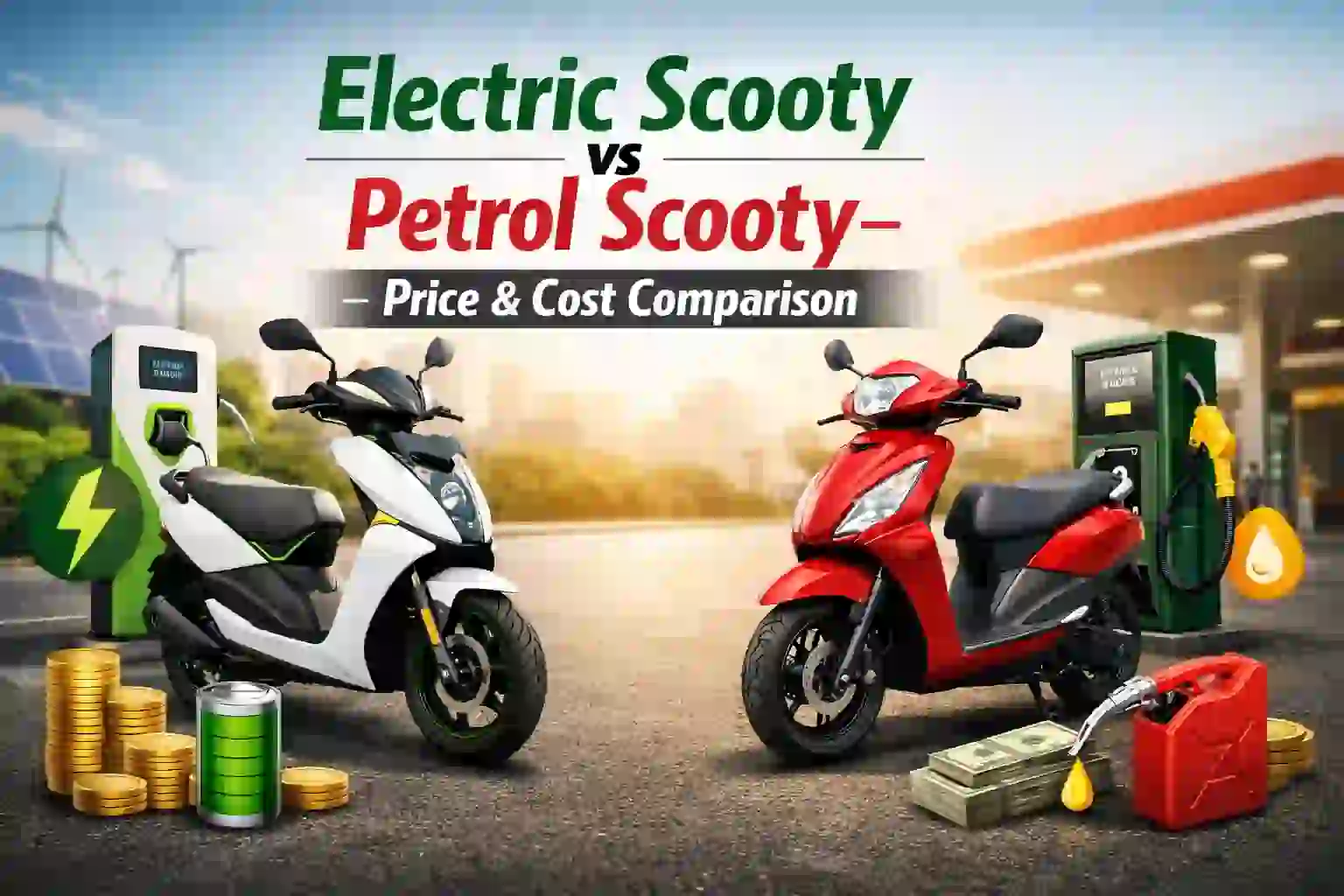
Electric Scooty vs Petrol Scooty – Price & Cost Comparison
The debate between Electric Scooty vs Petrol Scooty is becoming increasingly popular as fuel prices continue to rise and electric vehicles gain attention worldwide. In countries like Pakistan and India, many people are now considering whether an electric scooty is a better option than a traditional petrol scooty. Both vehicles serve the same purpose of daily commuting, but they differ significantly in terms of price, maintenance cost, fuel expenses, environmental impact, and long-term value.
This detailed guide will help you understand the Electric Scooty vs Petrol Scooty – Price & Cost Comparison so you can choose the best option based on your budget and needs.
Electric Scooty vs Petrol Scooty – Basic Overview
Before comparing costs, it is important to understand how both vehicles work.
Electric Scooty
An electric scooty runs on a battery-powered electric motor instead of an internal combustion engine. The battery can be charged using electricity from a standard power outlet. Electric scooters are known for their quiet operation, low maintenance, and eco-friendly performance.
Petrol Scooty
A petrol scooty uses a petrol engine that burns fuel to produce power. These scooters have been popular for decades because of their long driving range and easy refueling process.
While both types of scooters provide convenient transportation, the overall ownership cost and running expenses differ significantly.

Electric Scooty vs Petrol Scooty Price Comparison
The first thing most buyers consider is the purchase price.
Electric Scooty Price
Electric scooters are usually slightly more expensive initially because of the battery and electric motor technology. The average price range may vary depending on brand and battery capacity.
Typical price range:
- Basic electric scooty: $700 – $1200
- Mid-range electric scooty: $1200 – $2000
- Premium electric scooty: $2000+
However, many governments offer subsidies and incentives for electric vehicles which can reduce the effective price.
Petrol Scooty Price
Petrol scooters are generally cheaper to purchase compared to electric ones.
Typical price range:
- Entry level petrol scooty: $600 – $1000
- Mid range petrol scooty: $1000 – $1500
- Premium petrol scooty: $1500+
Although petrol scooters may appear cheaper initially, the running cost over time is much higher.

Electric Scooty vs Petrol Scooty Running Cost
Running cost is one of the most important factors when comparing electric vs petrol scooters.
Electric Scooty Running Cost
Electric scooters consume electricity instead of fuel.
Average electricity consumption:
- 1 full charge: 3 to 4 units of electricity
- Cost per charge: very low compared to petrol
A fully charged battery can usually travel 60 to 100 kilometers depending on the model.
Monthly electricity cost for daily commuting is often 70 to 80 percent cheaper than petrol fuel expenses.
Petrol Scooty Running Cost
Petrol scooters require fuel regularly.
Average mileage:
- 40 to 55 km per liter
With rising fuel prices, the monthly petrol cost becomes a major expense, especially for daily commuters.
Over several years, the total fuel cost of a petrol scooter can exceed the purchase price of the vehicle.

Electric Scooty vs Petrol Scooty Maintenance Cost
Maintenance is another major factor when choosing between the two.
Electric Scooty Maintenance Cost
Electric scooters have fewer moving parts compared to petrol scooters. Because of this, they require less frequent servicing.
Common maintenance items:
- Brake pads
- Tires
- Battery replacement after several years
There is no engine oil, spark plug, clutch, or exhaust system, which significantly reduces maintenance expenses.
Petrol Scooty Maintenance Cost
Petrol scooters require regular servicing to keep the engine running efficiently.
Typical maintenance includes:
- Engine oil changes
- Air filter replacement
- Spark plug replacement
- Engine servicing
Over time, these maintenance requirements increase the total ownership cost.

Electric Scooty vs Petrol Scooty Charging vs Fueling
Another difference is how the vehicle gets energy.
Electric Scooty Charging
Charging an electric scooty is simple.
You can:
- charge it at home
- plug it into a regular power outlet
- charge overnight
Charging time usually ranges between 3 to 6 hours depending on battery size.
Petrol Scooty Fueling
Petrol scooters require refueling at a petrol station.
Advantages include:
- refueling takes only a few minutes
- longer travel range
However, frequent petrol station visits can be inconvenient for some users.
Electric Scooty vs Petrol Scooty Performance Comparison
Performance can also influence buying decisions.
Electric Scooty Performance
Electric scooters provide:
- instant torque
- smooth acceleration
- silent operation
They are ideal for city commuting and short distance travel.
However, top speed is usually lower than petrol scooters.
Petrol Scooty Performance
Petrol scooters usually offer:
- higher top speed
- longer travel range
- better performance for long trips
For highway travel, petrol scooters may still be more practical.
Electric Scooty vs Petrol Scooty Environmental Impact
Environmental impact is an important consideration today.
Electric Scooty Environmental Benefits
Electric scooters produce:
- zero tailpipe emissions
- no air pollution
- lower carbon footprint
They help reduce urban pollution and noise levels.
Petrol Scooty Environmental Impact
Petrol scooters emit:
- carbon dioxide
- nitrogen oxides
- other harmful pollutants
These emissions contribute to air pollution and climate change.
Because of these environmental benefits, many countries are promoting electric vehicles.
Electric Scooty vs Petrol Scooty Long Term Cost
When comparing the total ownership cost, electric scooters often become cheaper over time.
Example comparison over several years:
Electric scooter:
- higher purchase price
- very low running cost
- low maintenance
Petrol scooter:
- lower purchase price
- high fuel expenses
- higher maintenance cost
After a few years of use, the electric scooty usually becomes the more economical option.
Electric Scooty vs Petrol Scooty Pros and Cons
Electric Scooty Advantages
- lower running cost
- eco friendly
- quiet operation
- minimal maintenance
- convenient home charging
Electric Scooty Disadvantages
- higher purchase price
- limited range
- longer charging time
Petrol Scooty Advantages
- lower initial price
- longer travel range
- quick refueling
- widely available fuel stations
Petrol Scooty Disadvantages
- high fuel expenses
- more maintenance
- environmental pollution
Electric Scooty vs Petrol Scooty – Which One Is Better?
The best choice depends on your needs.
Choose an electric scooty if:
- you travel short distances daily
- you want low running costs
- you prefer eco friendly vehicles
Choose a petrol scooty if:
- you frequently travel long distances
- charging infrastructure is limited
- you want higher top speed
For most urban commuters, electric scooters are becoming the more economical and environmentally friendly option.
Frequently Asked Questions (FAQs) Electric Scooty vs Petrol Scooty
Is an electric scooty cheaper than a petrol scooty?
Electric scooters are usually more expensive initially, but their running cost is much lower. Over time, they often become cheaper than petrol scooters.
How much electricity does an electric scooter consume?
Most electric scooters require 3 to 4 units of electricity per full charge, allowing them to travel around 60 to 100 kilometers.
Which scooter is better for daily commuting?
Electric scooters are generally better for daily city commuting because they have low operating costs and require less maintenance.
Do electric scooters require maintenance?
Yes, but much less compared to petrol scooters. Electric scooters mainly require battery monitoring, brake servicing, and tire replacement.
Can electric scooters replace petrol scooters in the future?
With improvements in battery technology and charging infrastructure, electric scooters are likely to replace petrol scooters in many urban areas.